

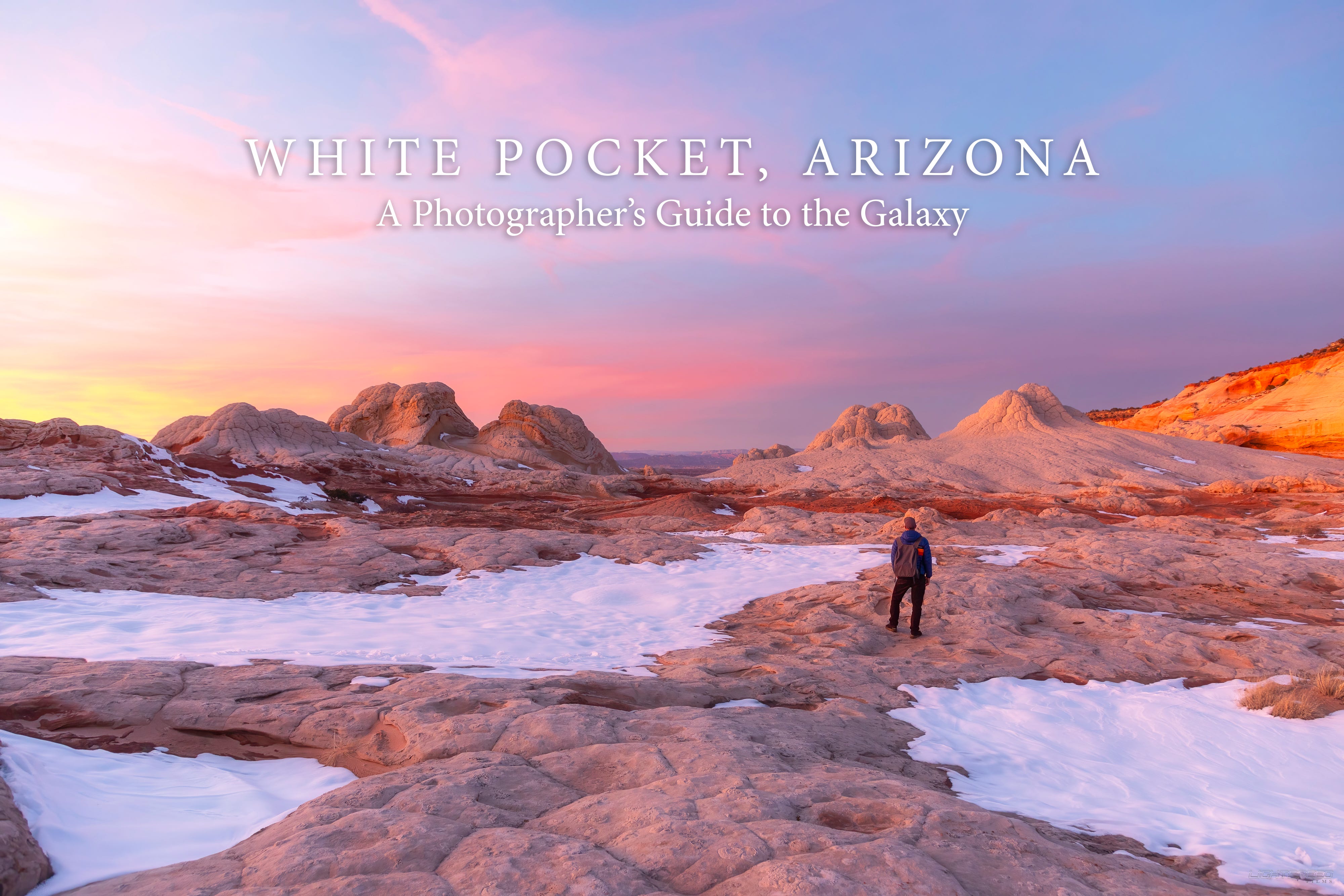
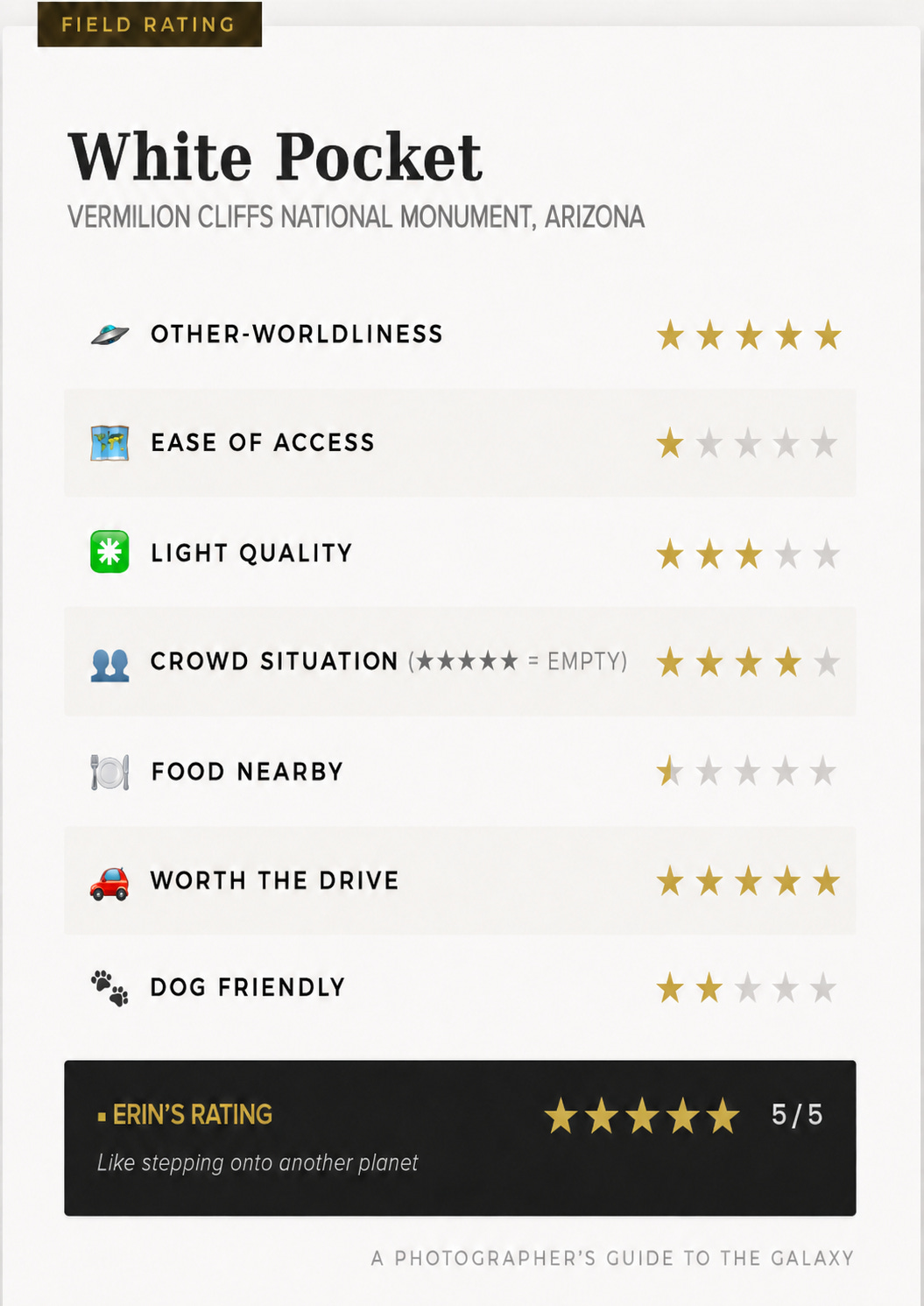
White Pocket feels like stumbling into another world.
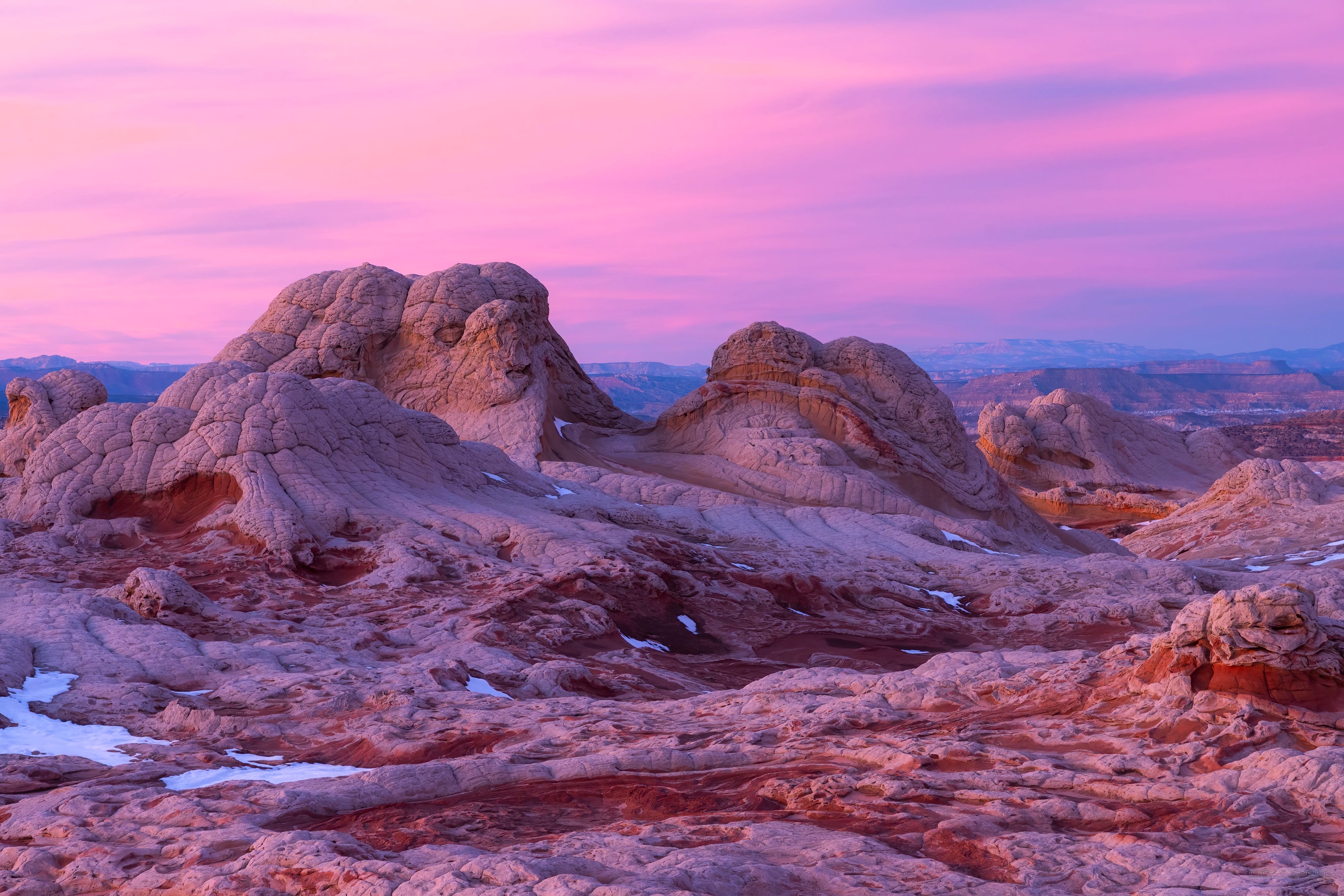
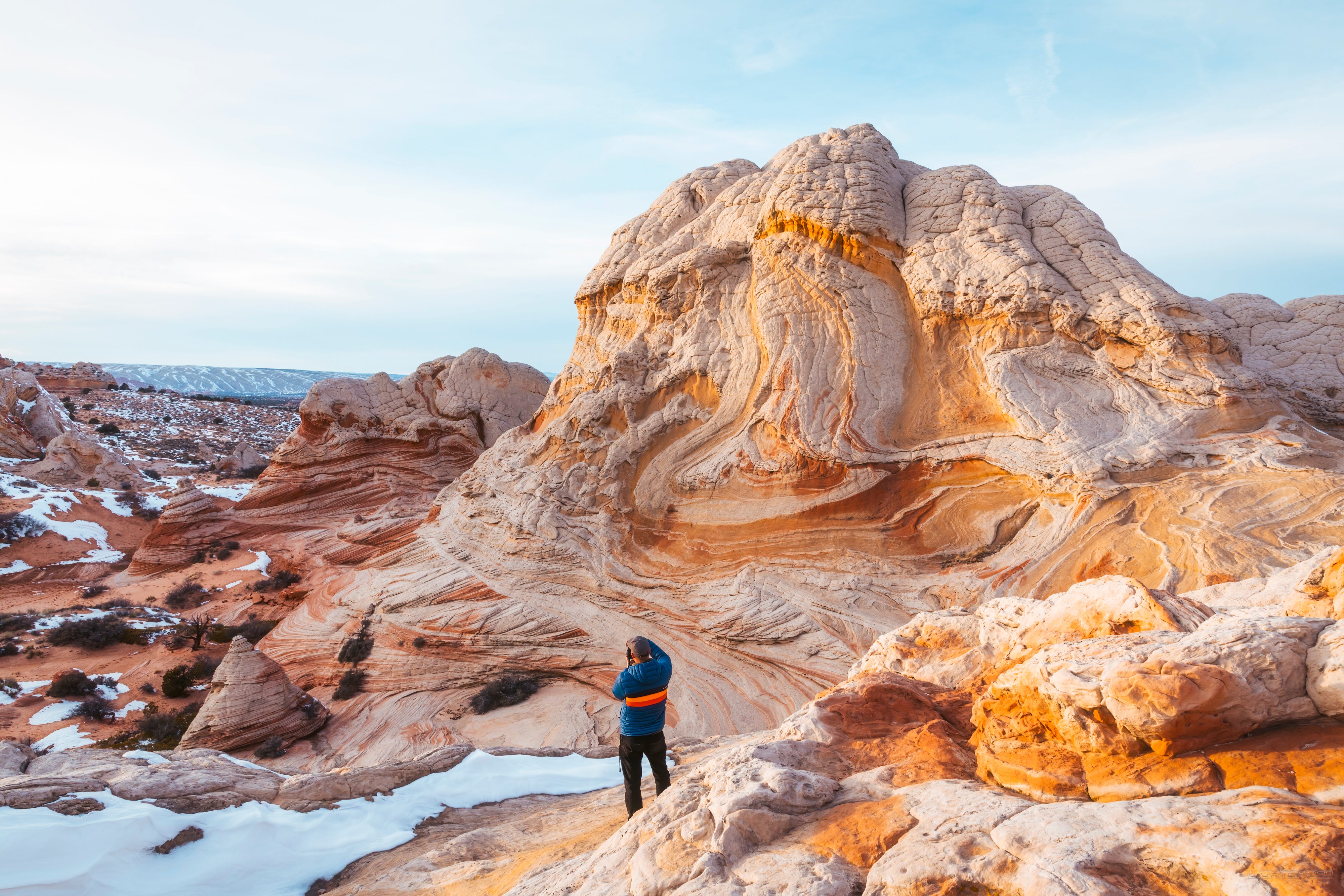
It is one of the strangest, most textured, most alien landscapes I have ever photographed. There are swirling layers of sandstone and brain-like formations, fiery orange waves, white domes, pools, pockets, and patterns that look like they were designed on a foreign planet. There is nothing else quite like it.
The catch is getting there.
This is one of the most difficult drives I have done. You are in the middle of nowhere. Deep sand, a brutally rough 4x4 route, no cell service, confusing road splits, mud pits, and rock obstacles. There are long stretches where you are just trusting your offline map and hoping you are still going the right way. A lot of people get stuck out there.
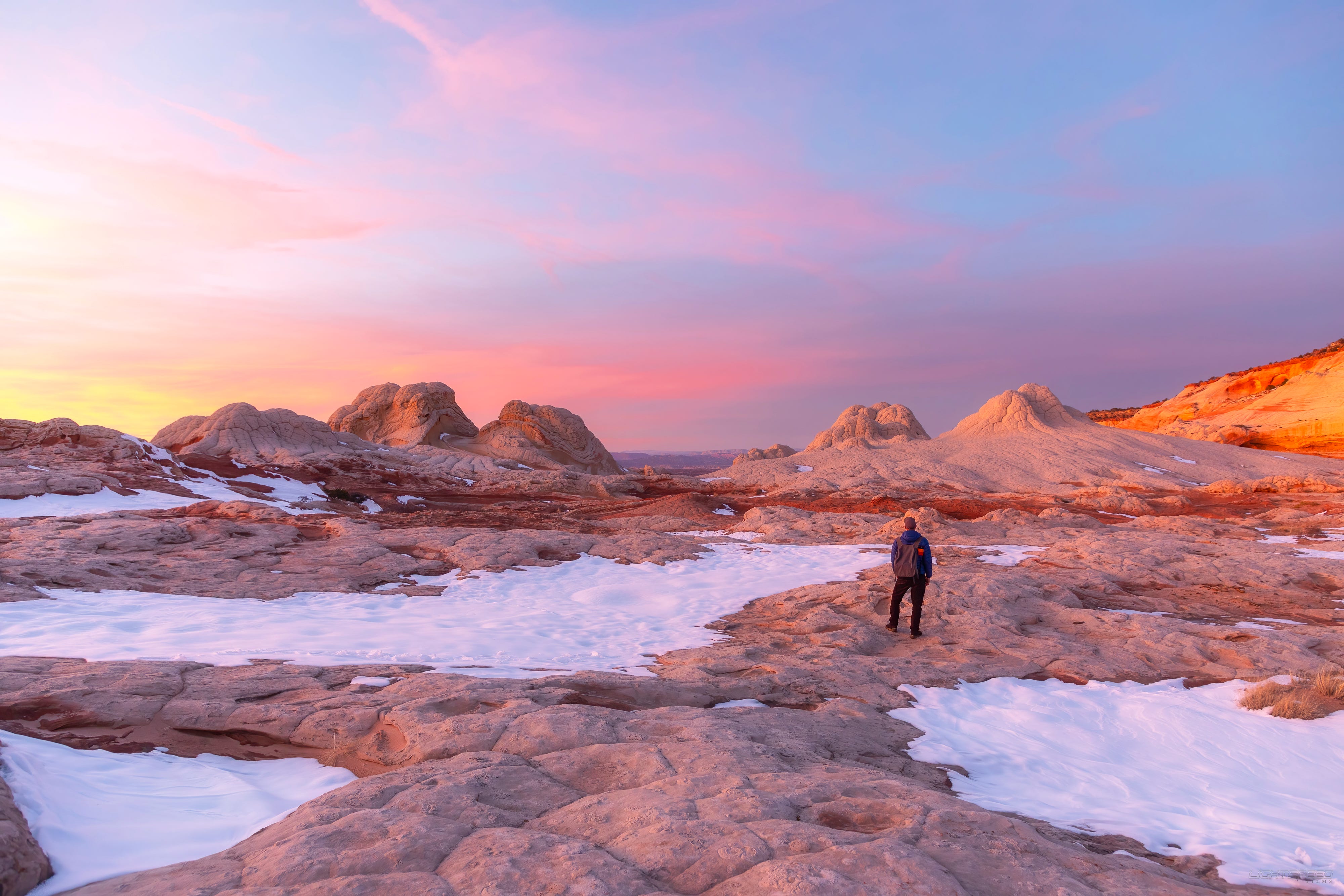
We went in February, off season, and had White Pocket completely to ourselves for golden hour and sunset. We saw several vehicles leaving on our way in, which leads me to believe that most people do this as a daytime stop. I get it, the drive back in the dark is scary. But golden hour and sunset are where this place turns truly otherworldly.
The best version of this trip, in my opinion, is to camp.
This guide covers how to get there, what to expect on the drive, Wire Pass (a slot canyon which is on the same road and worth understanding before you go), and how I’d approach White Pocket as a photographer.
Before we get into it, here’s what it looked like.
Quick Reference | The Full Story below
Quick Reference
Time of Year
Fall and Winter. October through February.
I went in February and it was perfect for avoiding crowds. 40s-50s daytime temperatures.
Avoid summer. You are in the desert. Extreme temperatures + monsoons.
Best Light
White Pocket: golden hour and sunset. I bet sunrise would also be great.
Midday light here is harsh and flat and will wash out the color in the rock.
Evening or sunrise also means fewer people. Most visitors come and go during the day.
Wire Pass: midday is fine. It is a slot canyon and the light is indirect either way.
The Drive
4x4, good tires, and high clearance required.
Deep sand, large rocks in the road, sometimes deep mud or snow.
About 75 miles from Kanab, UT.
No service. Download offline maps before you leave. Some of the signs and turnoffs get tricky.
Do not attempt this in a rental car. Do not attempt this without knowing your vehicle can handle deep sand and rough terrain. If you are unsure, hire a guide.
Airing down your tires can help in sand, but you’ll need a compressor to air back up.
Gear I used
I used my Canon R3 with a 24-105mm. So many different textures and features, you’ll want flexibility.
Drone: DJI Mavic 3 Cine Pro. This is BLM land. Flying is generally allowed as long as you follow FAA rules. Highly recommend. The aerial perspective here is unreal.
What to Pack
More water than you think you need.
Food for the day. There is nothing out there.
A spare tire. Maybe a tow strap and traction boards.
Warm layers in the winter months.
Permits
None required for White Pocket.
Wire Pass (Buckskin Gulch) requires a day or overnight pass from recreation.gov. The Wave, which is in the same general area, also requires a permit through a very competitive BLM lottery and is notoriously hard to get.